Learn Japanese by binge-watching
A few AI-made mini-dramas a day. Tap a word in the caption, the end card explains it, and it replays right when you are about to forget.
Android v2.7.2 · sha256 bd57d3d2 · allow installs from your browseriOS coming soon — watch on the web for now.
How it works
One word, one drama, three steps
Each clip teaches a single word. You meet it in the story, the end card makes it click, and it comes back just before you forget.
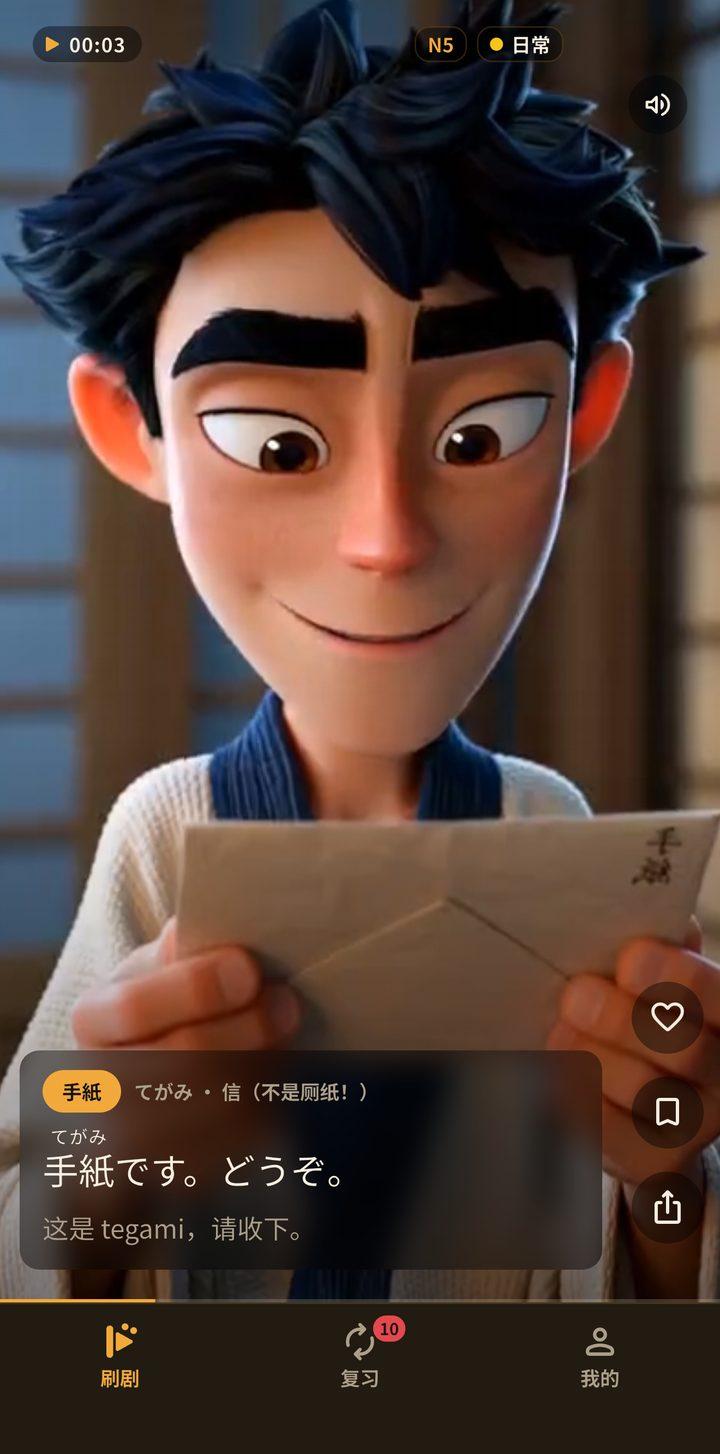
01 · Meet
Tap a word in the caption
The end card breaks it down: reading, pitch accent, meaning and an example sentence.
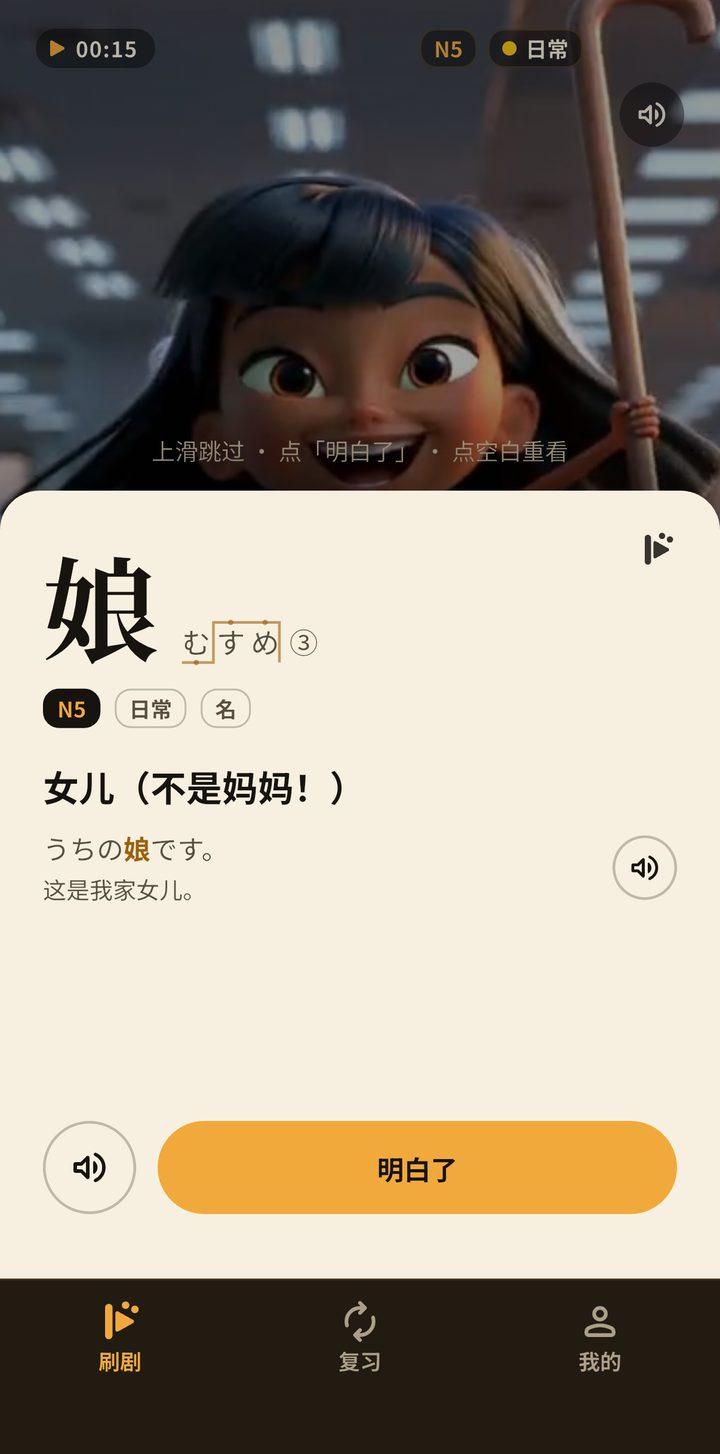
02 · Got it
One tap adds it to review
When it's due, the same clip replays — no flashcard deck to flip through. Tapped by mistake? You can undo it.
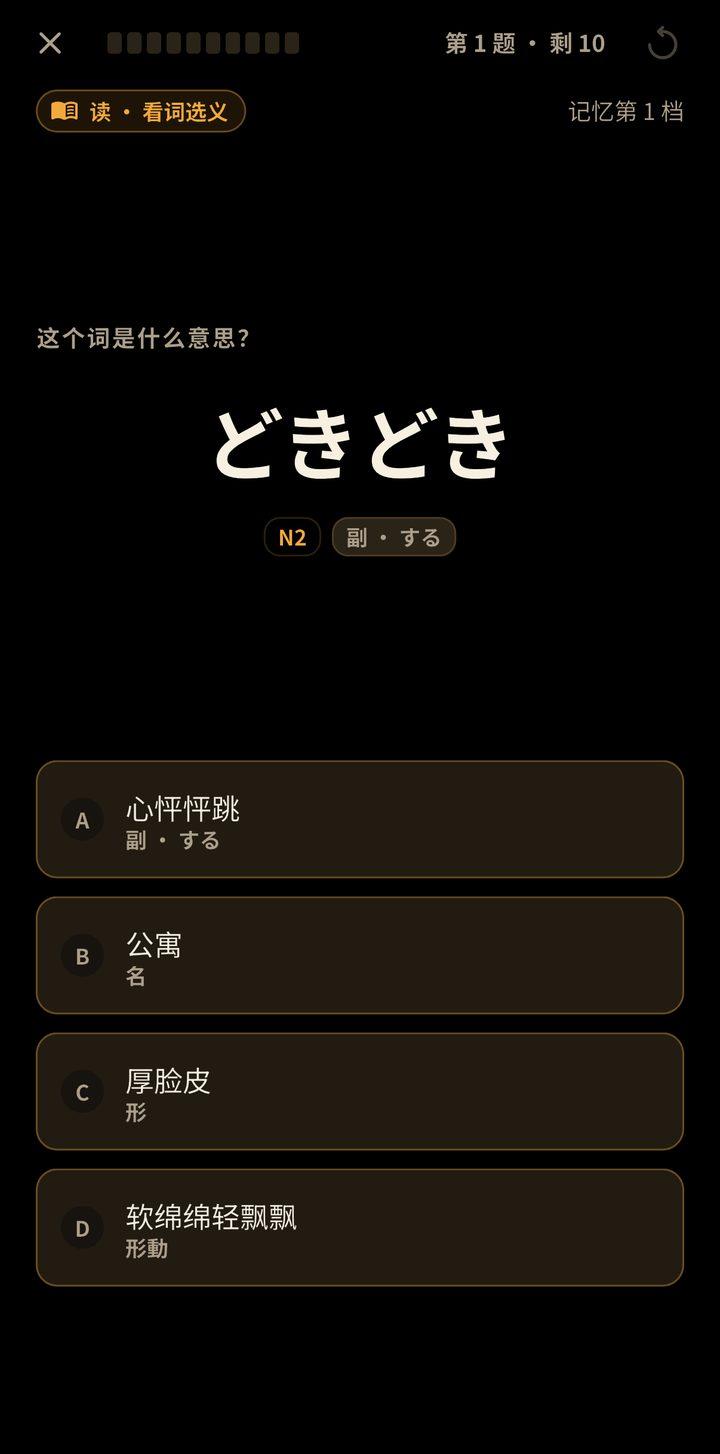
03 · Mastered
Read, listen, watch, write
Four question types take turns. Your answers set the grade automatically, and FSRS schedules the next review.
A few AI mini-dramas a day, one word each.
Themes
Seven themes, 131 dramas live
Daily life, anime, games, travel, work, food and campus — pick clips by level. Hover or tap a poster to preview the first few seconds, then watch the whole drama on the web.







Market
Why now
More foreigners settle in Japan every year. Japanese is being written into residence rules level by level — and Chinese speakers are the largest single language group among foreign residents.
People
4.28M
foreign residents · about 3.5% of Japan's population (June 2026)
Up 310,000–360,000 a year for the past four years — about twice the official projection of 164,000 a year.
Pathway
9 gates
Japanese is being written into residence rules, level by level
Ikusei Shūrō trainees A1 → permanent residency B1 (≈N3) → engineer / specialist visas B2 (≈N2) → Designated Activities No. 46 N1. Ikusei Shūrō starts in April 2027, and self-study apps don't count toward its training hours — the gap is in what learners do outside class.
Where we fit
1.01M
native Chinese speakers in Japan · 23.7%, the largest single language group
No product anywhere combines story-driven drama, JLPT-graded vocabulary and a Chinese-speaking audience. 131 mini-dramas, one word each, are already live.
Market size
¥120B+ a year
about ¥30,000 per person
Foreign residents in Japan spend an estimated ¥120 billion+ a year on learning Japanese — about ¥30,000 per person (MEXT, ISA and JLPT public data, 2024–25). Chinese speakers alone account for roughly ¥35 billion.
Estimate = language-school tuition × enrolment + courses / apps / JLPT fees; excludes employer-funded training under the 2027 Ikusei Shūrō scheme (up to ~¥20 billion a year more).
Download
Start watching now
The web version needs no install — open it and start watching. Get the app and it reminds you when words are due.
Android v2.7.2 · sha256 bd57d3d2 · allow installs from your browseriOS coming soon — watch on the web for now.